

Public safety · Immigration and the economy
Texas violent crime fell faster than the nation's as local agencies joined ICE, but the data can't yet credit enforcement
Texas' violent crime rate fell 13.2% in 2025, against 9.7% nationally. In a contractor survey, 41% of Texas construction firms said immigration enforcement had affected them.
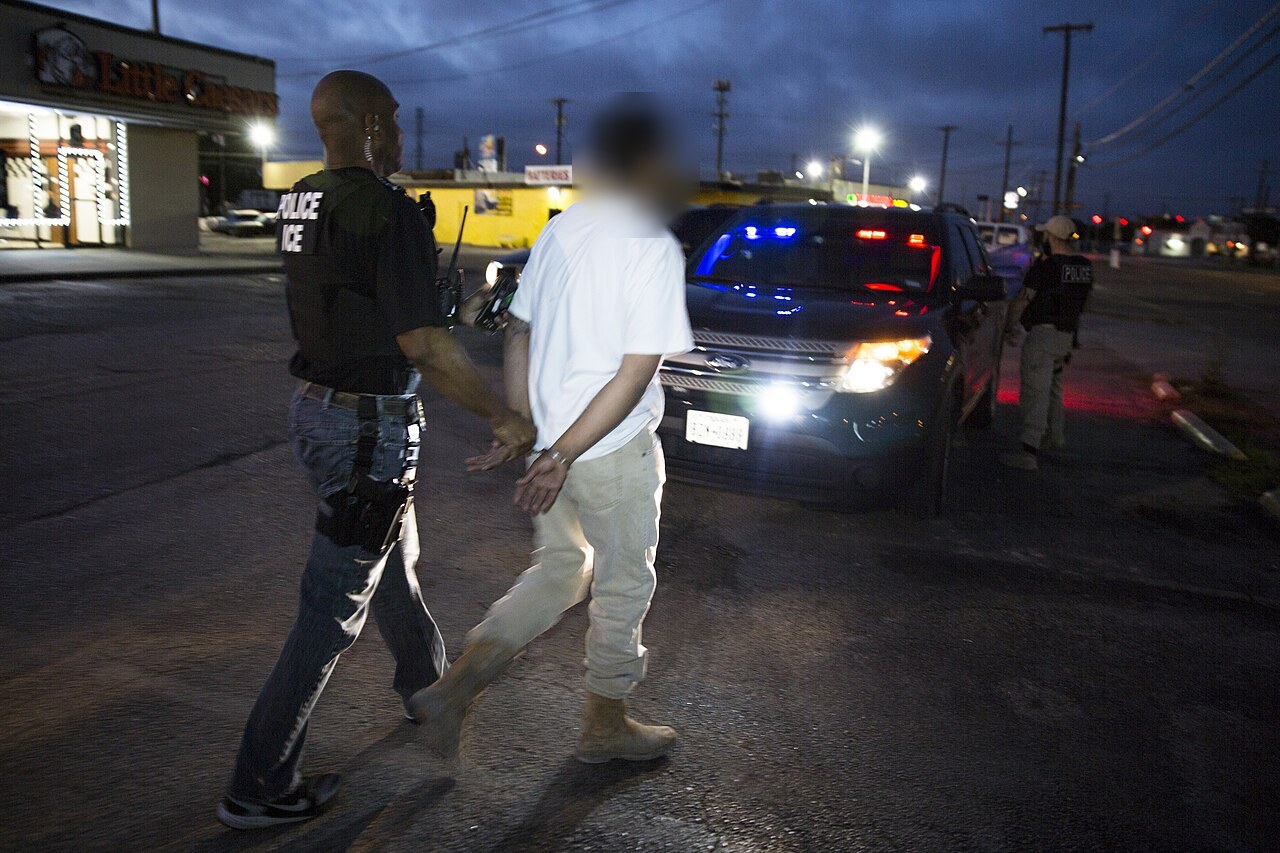

Violent crime in Texas fell faster than in the nation last year, a year when Texas agencies signed 228 new 287(g) agreements with U.S. Immigration and Customs Enforcement, according to ICE's list. Texas' violent crime rate dropped 13.2% in 2025 and its murder rate 12.7%, according to the Department of Public Safety. Nationally, the FBI reported a 9.7% drop in violent crime and an 18.5% drop in murder, so Texas' murder rate fell by less than the nation's.
Texas had 1,458 murders in 2025, down from 1,645 the year before. Its murder rate was 4.62 per 100,000 residents, compared with the FBI's national estimate of 4.1.
Who is in the jails
DPS tracks people booked into Texas jails whom federal fingerprint checks flag as noncitizens. From June 2011 through September 2026, more than 335,000 people classified by the Department of Homeland Security as illegally present were booked into local jails, DPS reports. They were charged with more than 603,000 offenses, including 1,134 homicide charges, and those charges have led to more than 230,000 convictions so far, including 636 for homicide.
DPS notes the counts include only people whose fingerprints were already in a federal immigration database, so they don't capture everyone.
Nationally, of the people in ICE custody on July 11, the date of its latest published data, 29% had criminal convictions and 31% had pending criminal charges. The other 40% were held on immigration violations alone, according to ICE. The agency reported 356,389 removals in fiscal 2026 through July 11.
Does enforcement lower crime?
The research doesn't settle it. A 2014 study of Secure Communities, the federal fingerprint-sharing program that DPS says underlies its noncitizen data, found it had no observable effect on overall crime rates. A 2020 study using Texas DPS arrest records from 2012 to 2018 found undocumented immigrants had lower felony arrest rates than native-born citizens and legal immigrants.
Neither study examined 2025 or the current scale of enforcement. Crime also fell nationally in 2025.
The labor side
Texas added 26,900 construction jobs in the year ending in October, a 3% gain, according to the U.S. Bureau of Labor Statistics. That outpaced the state's overall job growth of 1.4%. Unemployment was 4.4%.
Contractors report strain anyway. In a survey taken in November and December 2025, 41% of Texas firms said immigration enforcement had affected them directly or indirectly, Ken Simonson, chief economist of the Associated General Contractors of America, told the Dallas Fed. One in five said agents had visited a job site or office, and one in five said workers didn't show up or left because of actual or rumored enforcement. In 2024, 53% of Texas construction trades workers were born outside the U.S., compared with 35% nationally, he said, citing census data. Texas is among the top three states by that measure, he said. He noted that foreign-born does not mean here illegally. In the most recent wage reading he cited, for December, construction wages were up 4.5%, compared with 3.8% for all private-sector workers. He cautioned that the survey results may not reflect current conditions.
What it means
Removing people who commit crimes makes communities safer. That is the plain case for enforcement, and the DPS numbers show the scale: hundreds of thousands of charges, more than 600 homicide convictions. Most people in ICE custody nationally had a conviction or a pending charge.
What the data can't yet show is how much of Texas' 2025 crime drop enforcement caused. Crime fell across the country, and the two studies cited here found no measurable crime effect from Secure Communities and lower arrest rates for undocumented immigrants in Texas. Credit should wait for evidence.
The economic picture is mixed. Texas construction jobs are still growing, up 3% in a year. Contractors also report disruption, in an industry where more than half of the trades workforce in Texas is foreign-born. The survey doesn't show how much of that disruption lasted or whether it explains the higher construction wages Simonson cited. Lawmakers who back enforcement, as The Landmark does, should also plan for how those jobs get filled legally.