

Economy · Immigration enforcement and construction labor
Enforcement is straining Texas builders, but jobs and pay are still rising
Texas added 26,900 construction jobs in the year to October, and construction pay rose 4.1% in 2025. Still, 41% of Texas contractors told AGC that immigration enforcement had affected them.
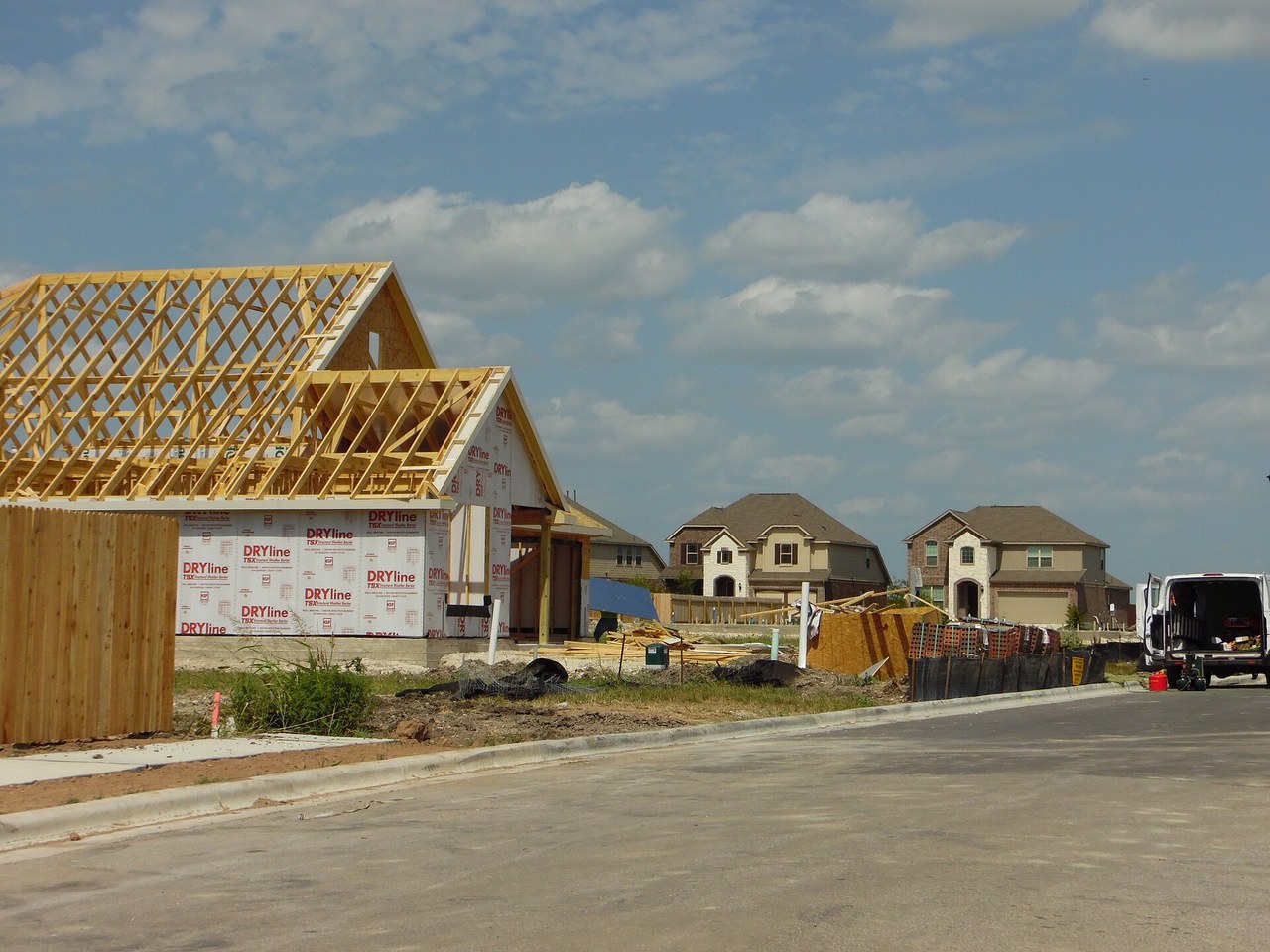

Texas has more construction workers than a year ago, even as federal immigration enforcement has stepped up. It had 930,500 construction jobs in October, up 26,900, or 3.0%, from a year earlier and faster than the 1.4% growth in all nonfarm jobs, the U.S. Bureau of Labor Statistics reports.
Builders say the strain is real anyway. In a survey taken in November and December 2025, 41% of Texas contractors told the Associated General Contractors of America (AGC) that immigration enforcement had affected their firm, and 20% said workers failed to show up or left a job over actual or rumored enforcement. AGC's newer national survey, taken in July and August 2026, found 29% of firms reporting at least one effect and 12% reporting workers who left or didn't appear. The surveys cover different samples, so 41% to 29% is not a trend.
Where it shows
The strain is uneven. The Dallas Fed reported that construction jobs in the Rio Grande Valley fell an annualized 5.3% (200 jobs) from May to August 2025, the largest decline among the region's sectors. Mario Guerrero, executive director of the South Texas Builders Association, told KVUE in January that a basic 2,100-square-foot home that took three to four months to build now takes nine to 11. That is his estimate. We found no government data on build times.
Enforcement isn't the only pressure. Among AGC firms nationally that reported on data center effects, 58% said those projects have increased competition for skilled workers. Half of all respondents said job candidates lack needed skills or licenses, and 42% said worker shortages have delayed projects, down from 45% a year earlier.
What pay shows
Texas construction paid an average of $1,669 a week in 2025, up 4.1% from 2024, BLS wage records show. That beat the 3.5% rise across all private industries, but it was slower than construction's 5.0% gain in 2024 and 4.7% in 2023. Preliminary first-quarter 2026 pay was up 4.4% from a year earlier. In May 2025, BLS put average pay at $22.69 an hour for Texas roofers, $23.58 for drywall installers and $24.51 for carpenters, the category that includes framers. Those are levels, not trends. In AGC's national survey, 55% of firms raised hourly craft pay by more than they did a year earlier.
Housing and the legal pipeline
The housing risk is documented but not yet visible in Texas. A working paper on the 2008-13 Secure Communities program found that counties where it rolled out built 5.7% fewer new homes, and quality-adjusted new-home prices rose 4.4%. It is a working paper that covers the whole country from 2008 to 2013, not Texas today. The Dallas Fed tied the roughly 13% drop in Texas residential construction projects in 2025 to high interest rates and falling home prices.
The legal pipeline is growing from a small base. Texas had 28,558 active apprentices in construction industries on April 30, 2026, up 30% from 21,948 in its report a year earlier, the Texas Workforce Commission said, using U.S. Department of Labor data. Specialty trade contractors, the group that includes roofing, framing and drywall firms, grew from 14,738 to 19,263. Apprentices equal about 3% of the state's construction jobs.
Texas requires E-Verify, the federal work-authorization check, only for state agencies, universities and sexually oriented businesses. SB 324 would have extended it to nearly all employers. The Senate passed it on April 30, 2025, and the House never took it up. Rep. Carl Tepper, R-Lubbock, filed HB 137 on Nov. 9 to require private employers to use E-Verify and to allow license suspensions for knowingly employing people not lawfully present. KXAN reported that his similar bill last session never got a hearing.
What it means
The numbers don't show enforcement emptying Texas job sites. Construction employment is up 3%, and pay is rising about 4% a year. Public data can't yet confirm the delays builders describe in the Rio Grande Valley.
The numbers also don't show American workers cashing in. Texas pay gains in 2025 were smaller than in 2023 and 2024. The Congressional Research Service reviewed studies of earlier enforcement programs and found wages rose in low-wage labor markets but U.S.-born employment fell in higher-wage ones. In construction specifically, one of those studies found U.S.-born workers did not fully replace the workers who were removed and were not paid more. Texas firms told the Dallas Fed they would first add hours for current staff, then raise pay and hire more U.S.-born workers, naturalized citizens and green-card holders. The Dallas Fed survey does not include construction firms.
Supporters of enforcement, The Landmark among them, should watch for that hiring in the data. Arrests remove workers. Only employer verification changes who gets the next job, and no bill requiring private employers to use it has become law in Texas. HB 137 is the next test, and apprenticeships, at about 3% of construction jobs, are still small next to a workforce of more than 900,000.